• About
  • Guest Speaking and Trunk Show Information

The Plain Needlewoman

~ Quilt Study, Sewing, Vintage Textiles, Collecting quilts and other old odds and ends.

The  Plain Needlewoman

Tag Archives: old quilts

Collecting the Pieces

26 Friday Jun 2015

Posted by mcinnesjanette in Old Quilts, Scrap quilts

≈ 8 Comments

Tags

1930s quilts, Antique Quilts, Fabric Study, feed sacks, hand quilting, old quilts, The Donnellys
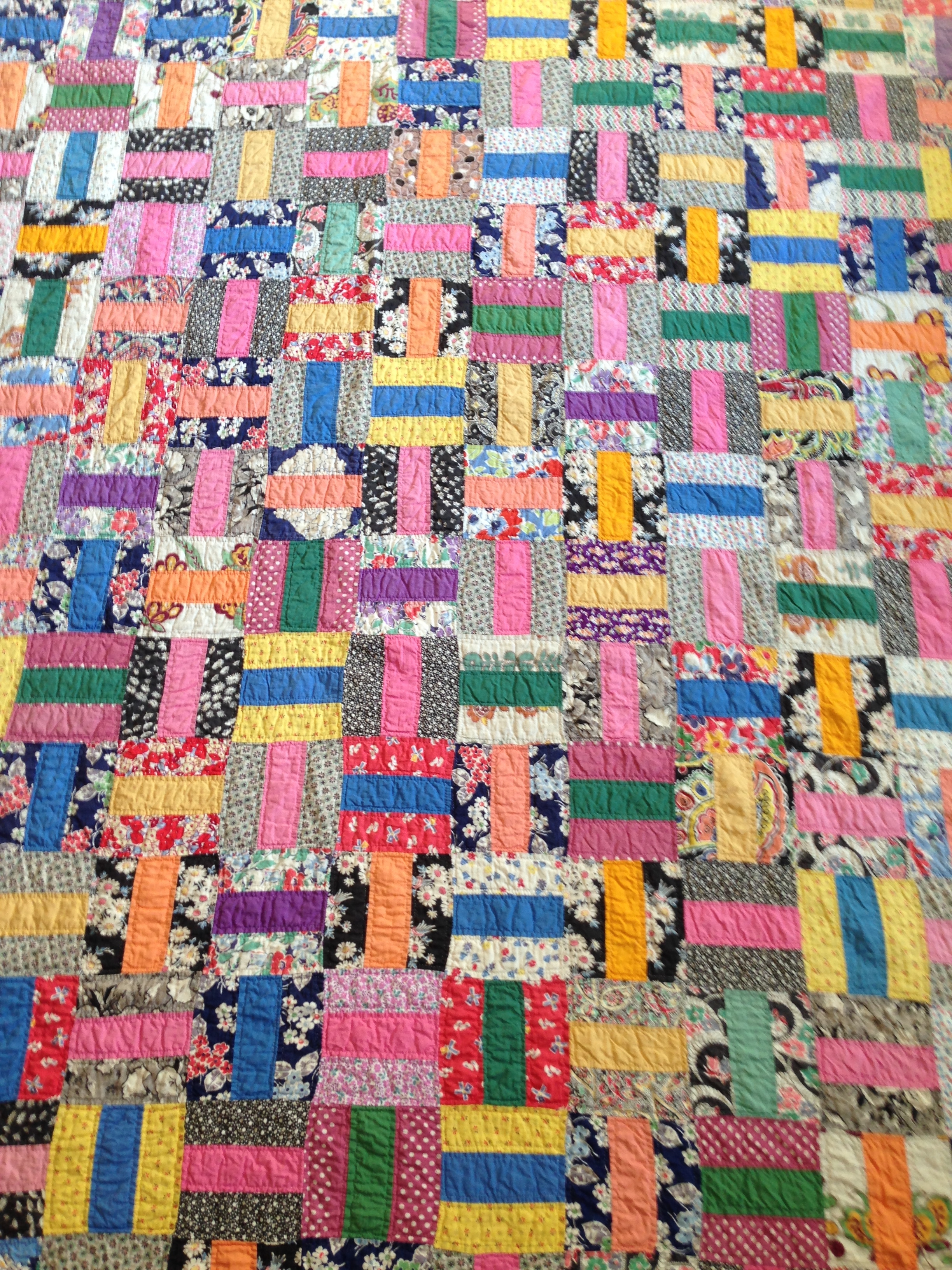
Basketweave Quilt circa 1930s to 40s

Basketweave Quilt circa 1930s to 40s

In times past when home dressmaking was a common practice and many a mother was kept busy stitching clothing for her often large family, scraps of cloth would have accumulated quickly from her endeavours as she produced dresses, shirts, nightwear and linens for her household.

No scrap would have been wasted and fabric would have been collected from worn out clothing, household linens and feedsacks. These fabrics would go into the scrap basket to be put to good use for the making of patchwork quilts. The ‘scrap basket’ represented the fashions of several years and would often include older pieces than what was typical of the era the finished quilt would represent. As any-one who has a collection of sewing scraps knows, we seldom get to the bottom of the basket. One quilt leads to another and the scrap pile continues to evolve.
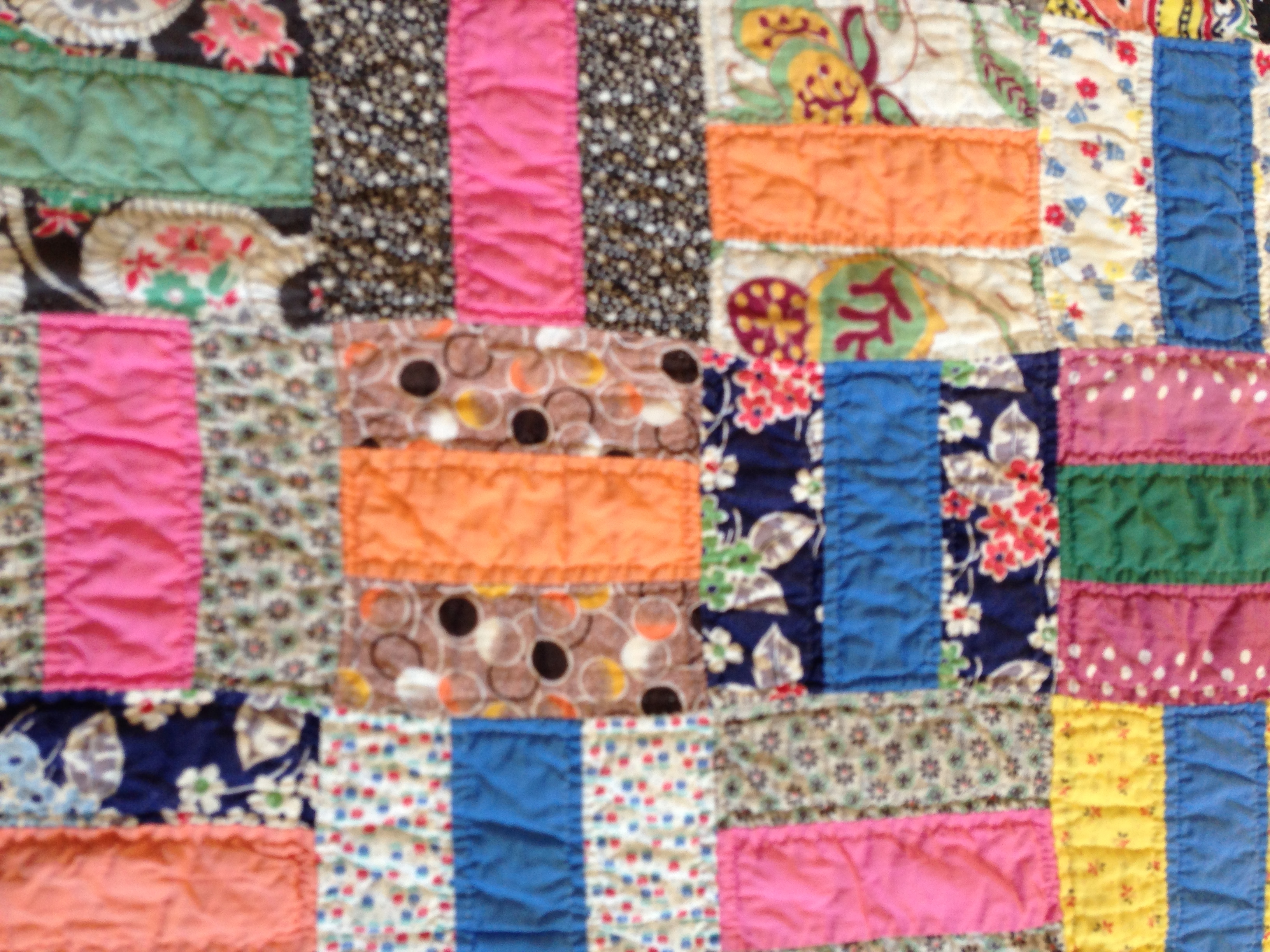
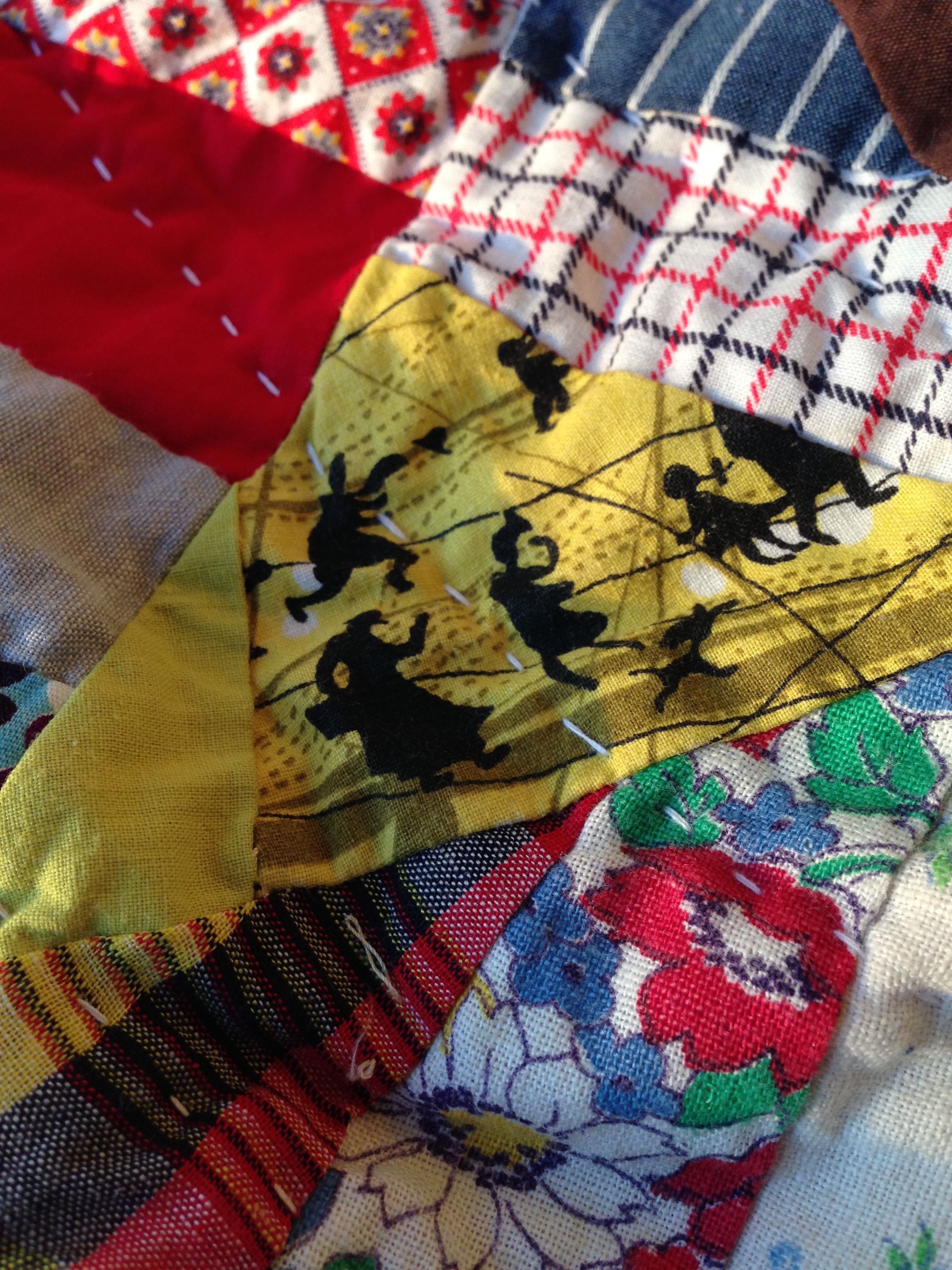
Detail of Basketweave quilt showing a collection of fabrics both plains and patterned.

Detail of Basketweave quilt showing a collection of fabrics both plains and patterned.

Whether the quilts demonstrate artistry in the arrangements of design and colour or the effect of the design is pure chance, scrap quilts made from a collection of fabrics will always be my sentimental favourites.
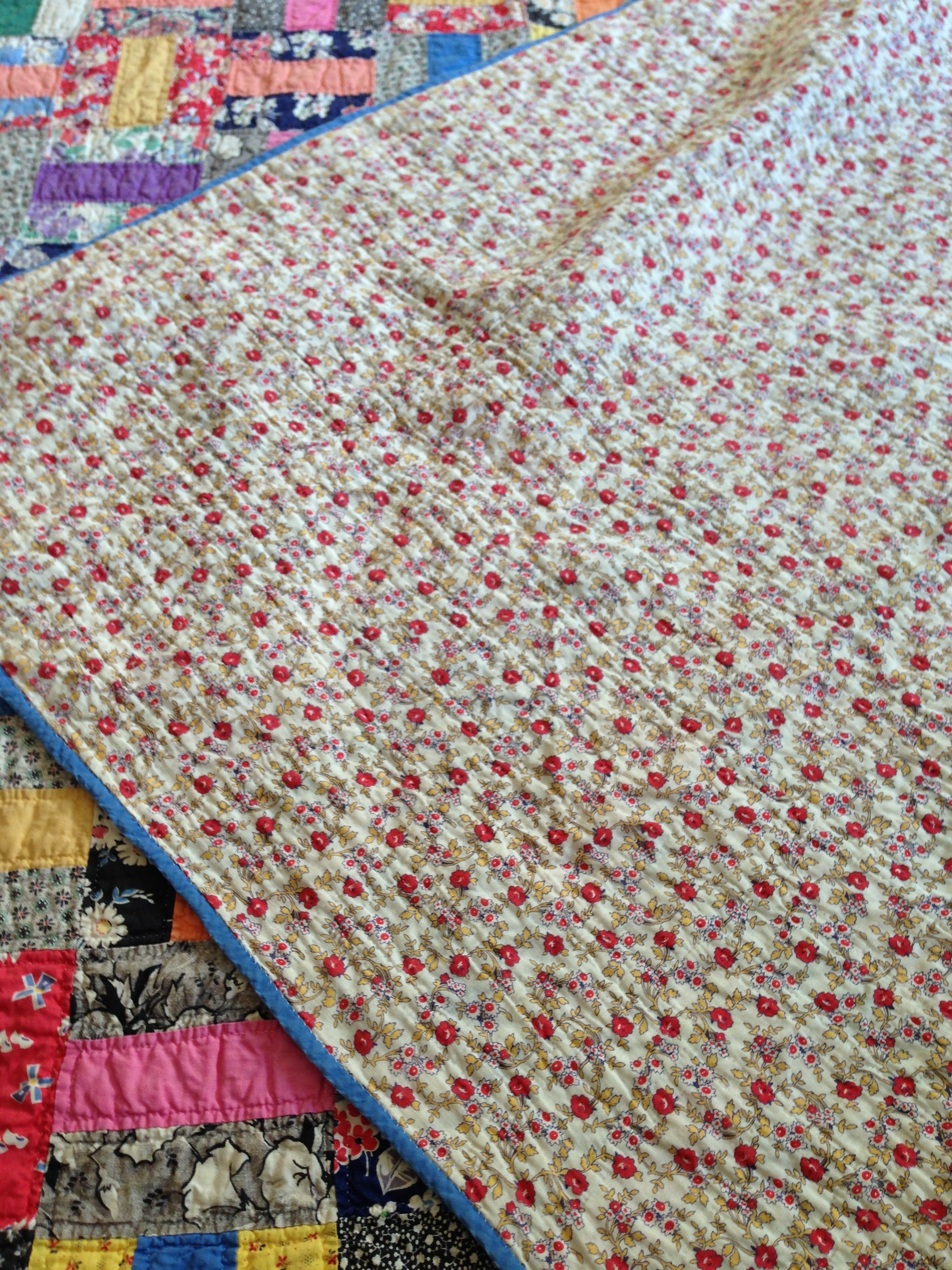
A beautiful feedsack backing.

A beautiful feedsack backing.

Scrap Fans, Circle of Friendship or Around the World.

Scrap Fans, Circle of Friendship or Around the World.

The Around the World Quilt, (which has many other names) came to me from the collection of Bernie and Eileen Donnelly. It is a beautiful quilt which they purchased at an exhibition of old and rare North American Quilts and Canadian Quilts by John Leach at South Yarra, Victoria in 1995. It was stated that the quilt was made by Old Order Mennonites from the area of Elora and Unionville in Southern Ontario Province in Canada.The quilt has quite a heavy batting, which is lovely on these cold Winter nights. Eileen commented that the quilter used an exceptionally clever arrangement of the small fans. The yellow setting squares in the sashing tie in with the yellow bases of the fans. The fans are appliquéd onto the block with very fine machine stitching (probably a treadle machine was used). The quilt is hand quilted and has a feedsack backing.

Feedsack backing.

Feedsack backing.

Another quilt that contains many scraps and displays an artistic use of colour is this gorgeous Fan Quilt from the 30s.

Fans with red.

Fans with red.

The quilt is very typical of the Depression era. When I purchased this quilt it had never been washed although it does have a sleeve for hanging on the back, so I presume it has been displayed at some point in time. The simple design of the Fan becomes a very sophisticated quilt with the placement of red in the centre of the nine tiny blades that create the fan. The quilting further enhances the effect created when the fans have been arranged by the maker to create an illusion of another design.

Detail of Fans and arrangement of blocks.

Detail of Fans and arrangement of blocks.

Hand quilting detail

Hand quilting detail

My Scrap Collection includes many different fabrics, many of them bought at op shops including woollen material which I use for rug hooking. When I saw this darling little bear pattern in the Spring Edition of Primitive Quilts and Projects, I just had to make it. I found some heavy coating scraps in the wool trunk and made my version of Roly Poly. I just adore the paper hat.

Roly Poly.

Roly Poly.

Happy fabric collecting, Warmly Janette, The Plain Needlewoman.

Postage Stamps and Strings

01 Wednesday Apr 2015

Posted by mcinnesjanette in stitching, vintage quilts

≈ 13 Comments

Tags

1930s quilts, feed sacks, hand quilting, old quilts, vintage fabrics

IMG_2688

Cut and stitched from the last remaining pieces of the scrap bag, Postage Stamp quilts and String quilts represent the ability of our quilting predecessors to be able to make wonderful quilts out of myriad fabric fragments. These scraps gathered from the remains of worn out clothing, practical sewing done for the household and treasured pieces from the dressmaker’s basket became the quilters’ palette in creating beauty and warmth for their loved ones. Throughout the years of hardship brought about by the Great Depression of the thirties quilters kept busy with needle and thread, stitching quilts to brighten their lives and lighten their spirits.

String quilt detail

String quilt detail

Fortunately many of these quilts have been preserved and we can enjoy studying the style and artistry of the makers who created beauty out of the scrap bag.

Not one but two.

Not one but two.

Tiny pieces

Tiny pieces

Twin Postage Stamp Quilts.

Set against a white background and solid red squares surrounding the assorted patterned fabrics, these quilts consist of 5,670 seventh/eighths inch squares. Each quilt measures 58 inches by 82 inches. The fabrics are typical of the 1930s with a couple from earlier decades.

An earlier fabric  included here.

An earlier fabric included here.

A darker red amongst the pastels.

A darker red amongst the pastels.


Some of the fabrics show signs of wear which indicate they were probably cut from used clothing. The quilt was skilfully machine pieced (more than likely on a treadle machine) using tiny seams. There were no rotary cutters or quarter inch seams in those days as that would have been considered far too wasteful. The quilts are simply hand quilted with neat, even quilting. Many designs belong in the category of Postage Stamp quilts and this lay-out of the squares using the red surrounded consistently by a floral fabric set with white can be identified as Jewel Box or Steps to the Altar.
Love the red.

Love the red.

String Quilts.
IMG_2645
The maker of this quilt not only saved her strings and strips, but saved the thread from the feed sacks at her disposal, to stitch the strings onto newspaper foundations. The quilt consists of 288 blocks which were stitched by hand onto the foundation. The 288 four and a half inch blocks were stitched together by machine, once again probably a treadle.

Detail of block

Detail of block

There are some amazing fabrics used in this quilt including many feed sack fabrics, ginghams, solids, stripes, plaids and most pleasing to me red polka dots.

Polka dots.

Polka dots.

The strings range in size from one quarter inch pieces to 3 inch at the very largest. This quilt maker would not have been following a pattern or instructions but would have worked freely and intuitively to create a vibrant design without letting one tiny string go to waste.

I have been inspired to make string quilts and continue to add to my scrap bag saving dressmaking scraps, recycling my son’s expensive pure cotton shirts,saving postage stamp size pieces and strings and strips from every quilting project.

String Pieced Star

String Pieced Star

Saving the pieces

Saving the pieces

Angels and tulips

Angels and tulips

The String Pieced Star and the Alice’s Tulips quilt, made in memory of my mother-in-law, are two of my attempts at string piecing. Needless to say there are many more quilt plans ahead.

Save the Pieces
Janette – The Plain Needlewoman

A Trip Around the World or Two

22 Thursday Jan 2015

Posted by mcinnesjanette in hand quilting, old quilt tops, stitching, Trip Around the World, vintage quilts

≈ 6 Comments

Tags

1930s quilts, Antique Quilts, Fabric Study, feed sacks, handquilting, old quilt tops, old quilts, Postage Stamp quilts, Trip Around the World

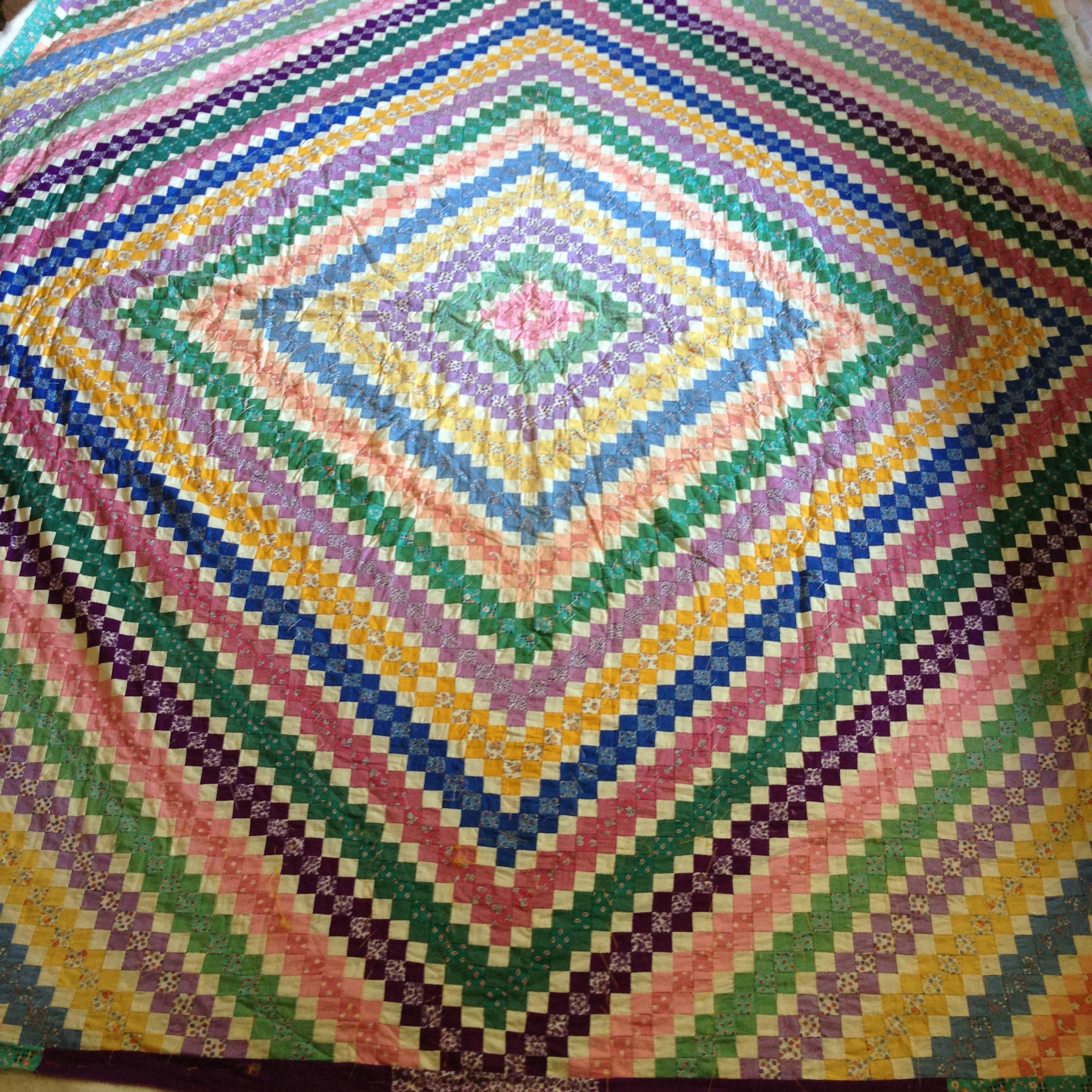
Trip Around the World - setting one

Trip Around the World – setting one

Trip Around the World - setting Two

Trip Around the World – setting Two

If You wish to take a trip around the world today, you only have to book a ticket with an airline and off you go. Paris, London, New York, Rome or Melbourne can be your destination.

To quilt makers of the grand quilt making epoch of the Thirties and Forties, a trip around the world would have been an incredible dream.

However, during this era ‘A Trip Around the World’ was made not by boat or plane but by cutting numerous tiny squares of fabrics and stitching these squares together to create quilts of great style and design. These quilts also demonstrate a sophisticated use of colour and pattern.

Wonderful use of colour

Wonderful use of colour

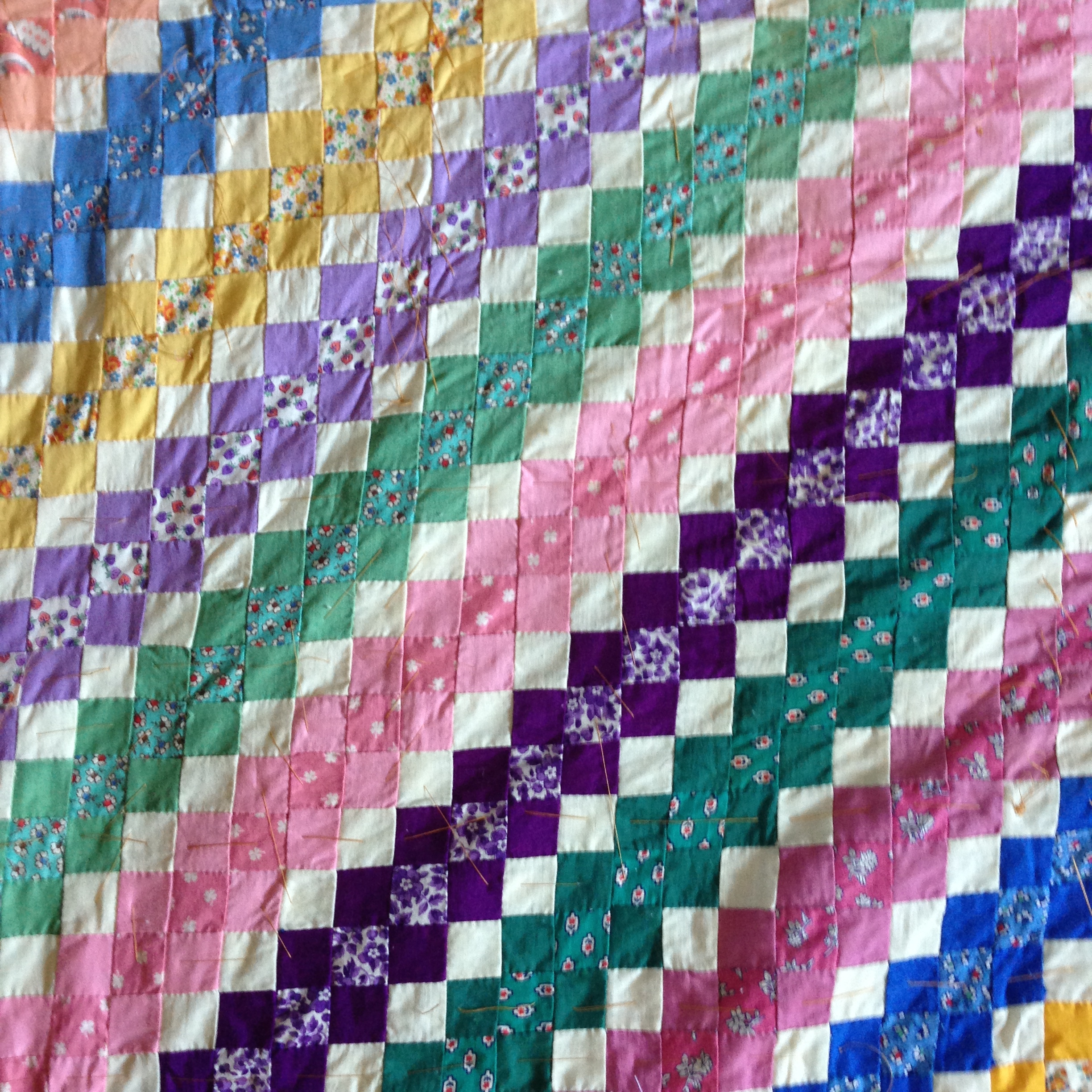
Tiny Squares - these measure 3/4 of an inch finished.

Tiny Squares – these measure 3/4 of an inch finished.

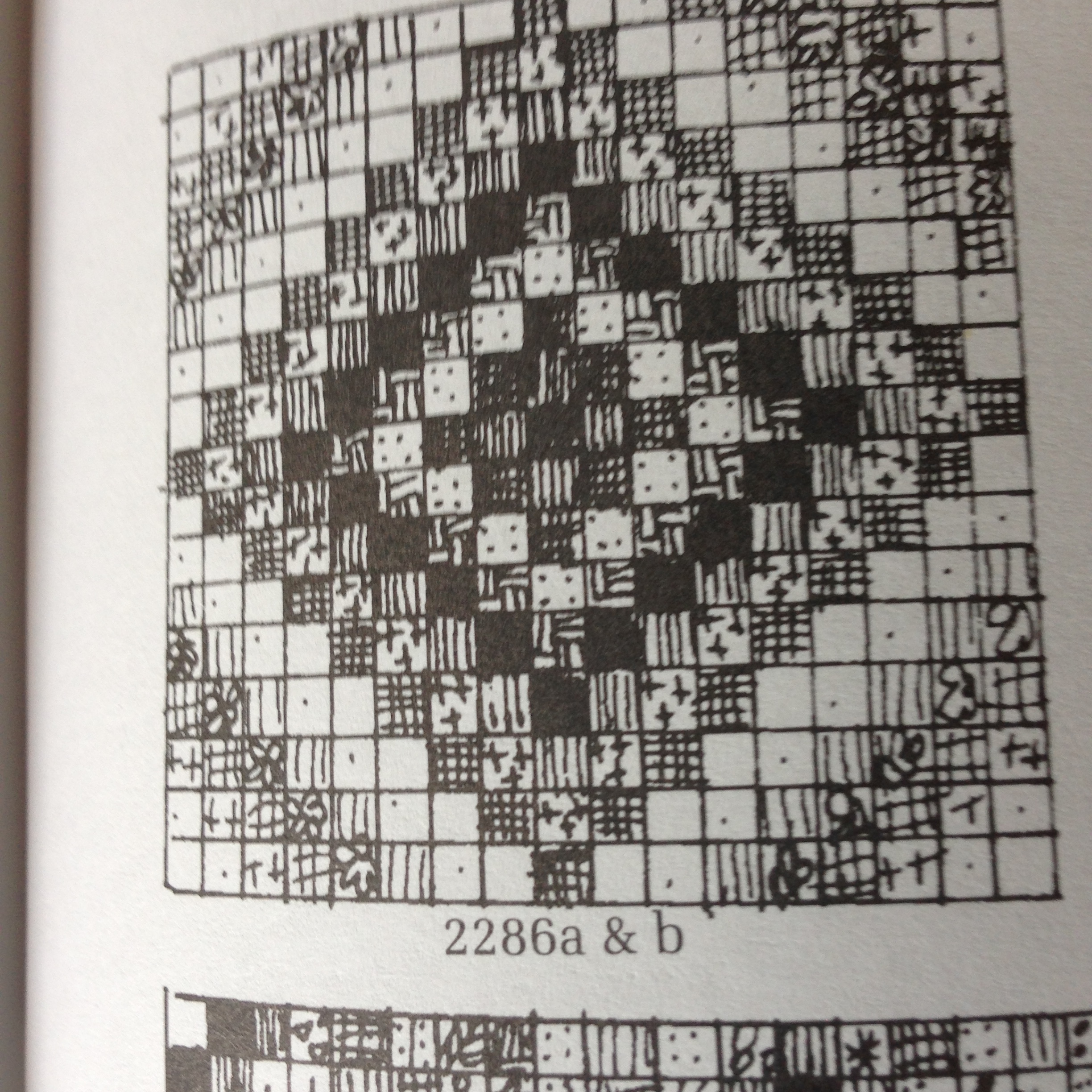
In Barbara Brackman’s Encyclopedia of Pieced Quilt Patterns these two Trip Around the World designs are to be found.

This design is identified as Trip Around the World - - Aunt Martha and Home Art

This design is identified as Trip Around the World – – Aunt Martha and Home Art

The second design is accredited to Holstein and also called Trip Around the World.

The second design is accredited to Holstein and also called Trip Around the World.

My quilts represent examples of both these designs. In the book ‘The World of Amish Quilts’ by Rachael and Kenneth Pellman. The Pellmans state that this arrangement of squares was a favoured design predominantly made in Lancaster County, PA. from where it spread to other Amish settlements. The Amish call this design Sunshine and Shadows. These quilts were made in solid colours and nearly always featured at least one large border. It is also stated that ‘the squares are arranged by colour to form a series of brightly coloured expanding diamonds. Sometimes the squares are tipped on point to form a pattern of squares. The Pellmans also state the ‘the Sunshine and Shadow arrangement of squares worked in printed fabrics rather than plain, may be called Trip Around the World and is often made by non-Amish women’.

I purchased the Trip Around the World quilt from the collection of The Donnellys. They bought this quilt in Groton, Massachusetts in 1995 at The Quilt Loft from Dianne Reece. It is hand pieced and quilted. The squares measure 1 inch finished and the quilter has used a great variety of fabrics, including dimity, feedsacks, shirtings and early dress fabrics. The inclusion of the solid red and black in this quilt shows the quilt maker’s great flair for colour and design. The quilt contains 3,125 squares. The backing is a plain white homespun which displays the lovely hand quilting to great effect. The binding on this quilt is noteworthy as it is stitched around the edges of the tiny squares, creating a dainty scallop finish.

Binding detail

Binding detail

The second Trip Around the World Quilt in my collection was bought as a top from the quilt collector Jan Baker. I have basted this quilt and hope to start quilting it this year. The squares in this top are even smaller, three quarters of an inch finished. This Trip Around the World is an example of the quilt maker tipping it on point. The edges finish square so there is no fiddly binding to be done. This quilter came up with a nice border design for her quilt.

section of border

section of border

The fabrics in this quilt appear to be very well co-ordinated. The pretty, little floral patterns match up with a complimentary solid colour. On studying this quilt, I wonder if it is an early example of a kit quilt, which were available at this time. Well, I will have lots of time to examine the fabrics and think about the original quilt maker when I undertake the task of hand quilting it.

I consider myself extremely privileged to have two Trip Around the World Quilts in my collection. I hope you might be inspired to create your own, as one of my friends already has. Good Luck, Sally and Happy Stiching to you all. Janette, The Plain Needlewoman

With my quilt

With my quilt

All Things Thirties

04 Thursday Dec 2014

Posted by mcinnesjanette in appliqué, hand quilting, old fabrics, old sewing books, vintage quilts

≈ 8 Comments

Tags

1930s quilts, Fabric Study, feed sacks, hand quilting, old quilts, vintage quilts

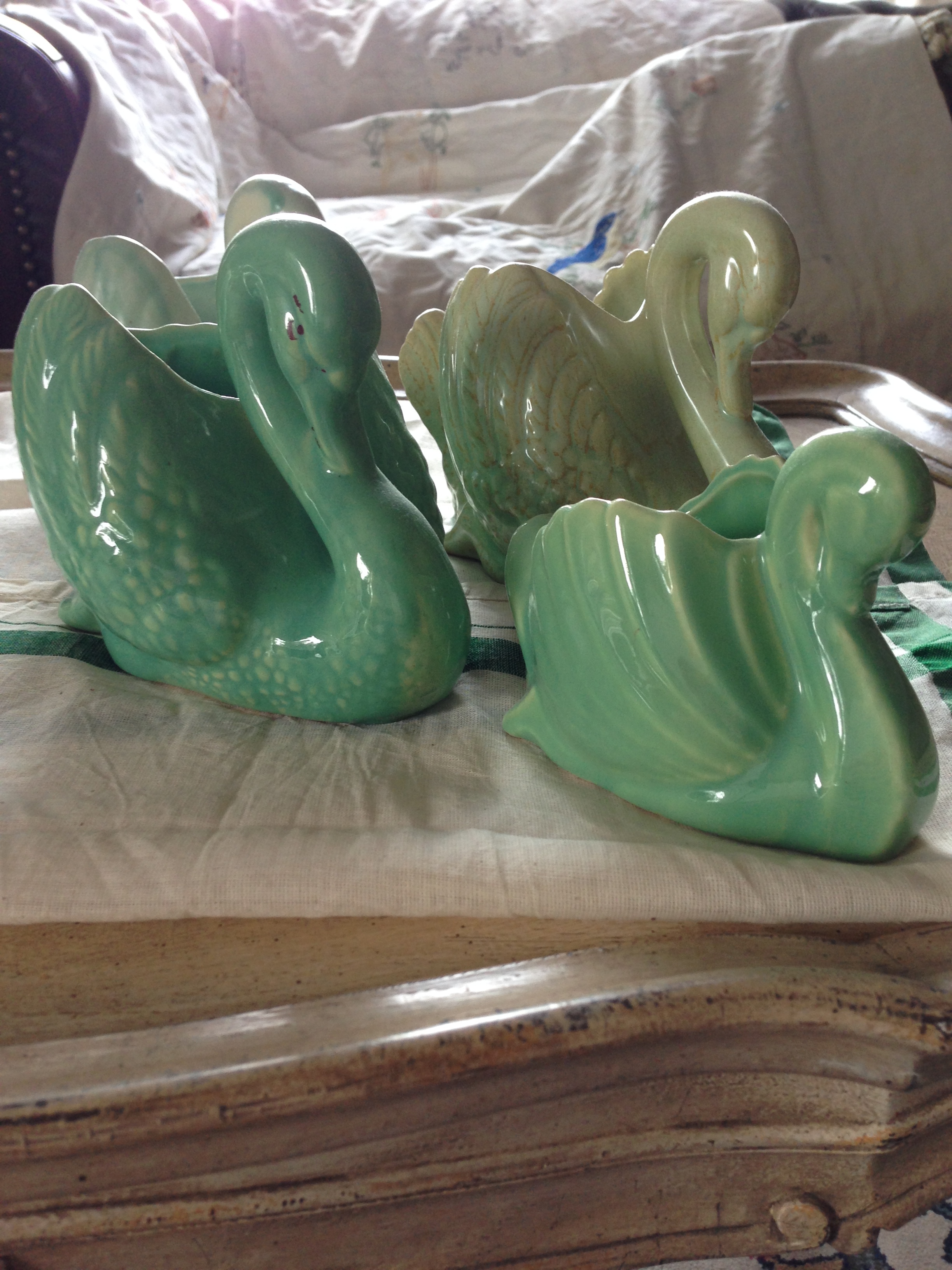
China Swans in Shades of Green

China Swans in Shades of Green

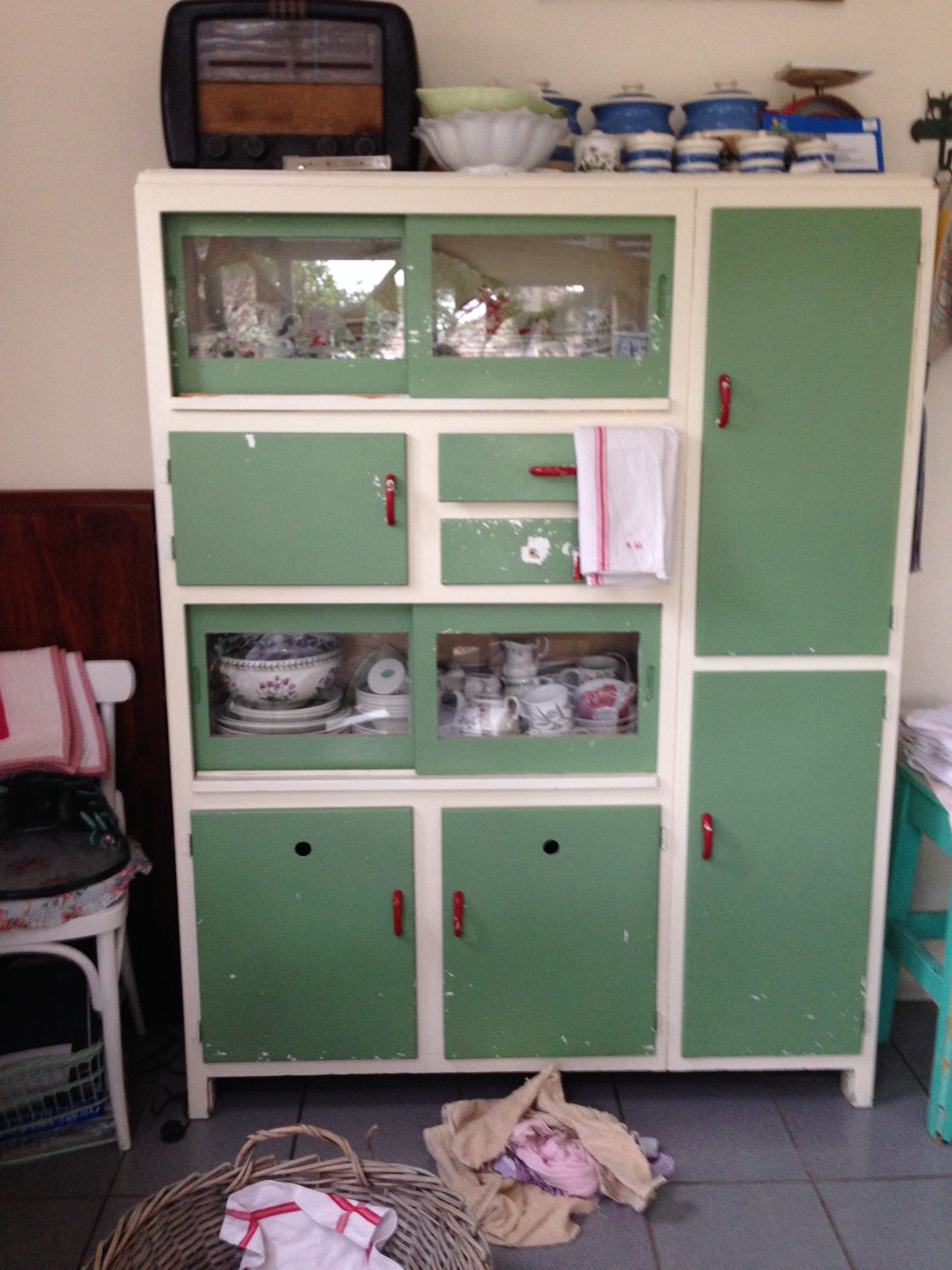
An early childhood memory of mine is of our cream and green kitchen. This lovely soft colour scheme was replaced in the 60s by a much brighter colour scheme. Every cupboard door (and there were many) was painted alternating colours of hot pink, aqua, yellow and red. We thought it was fab.

Green and cream colours for the kitchen

Green and cream colours for the kitchen

Bright colours for brighter times

Bright colours for brighter times

It is understandable following the decades of the depression era and World War 2, that bright colours became popular as the world celebrated peace and prosperity.

Quilt Designs from the Thirties by Sara Nephew

Quilt Designs from the Thirties by Sara Nephew

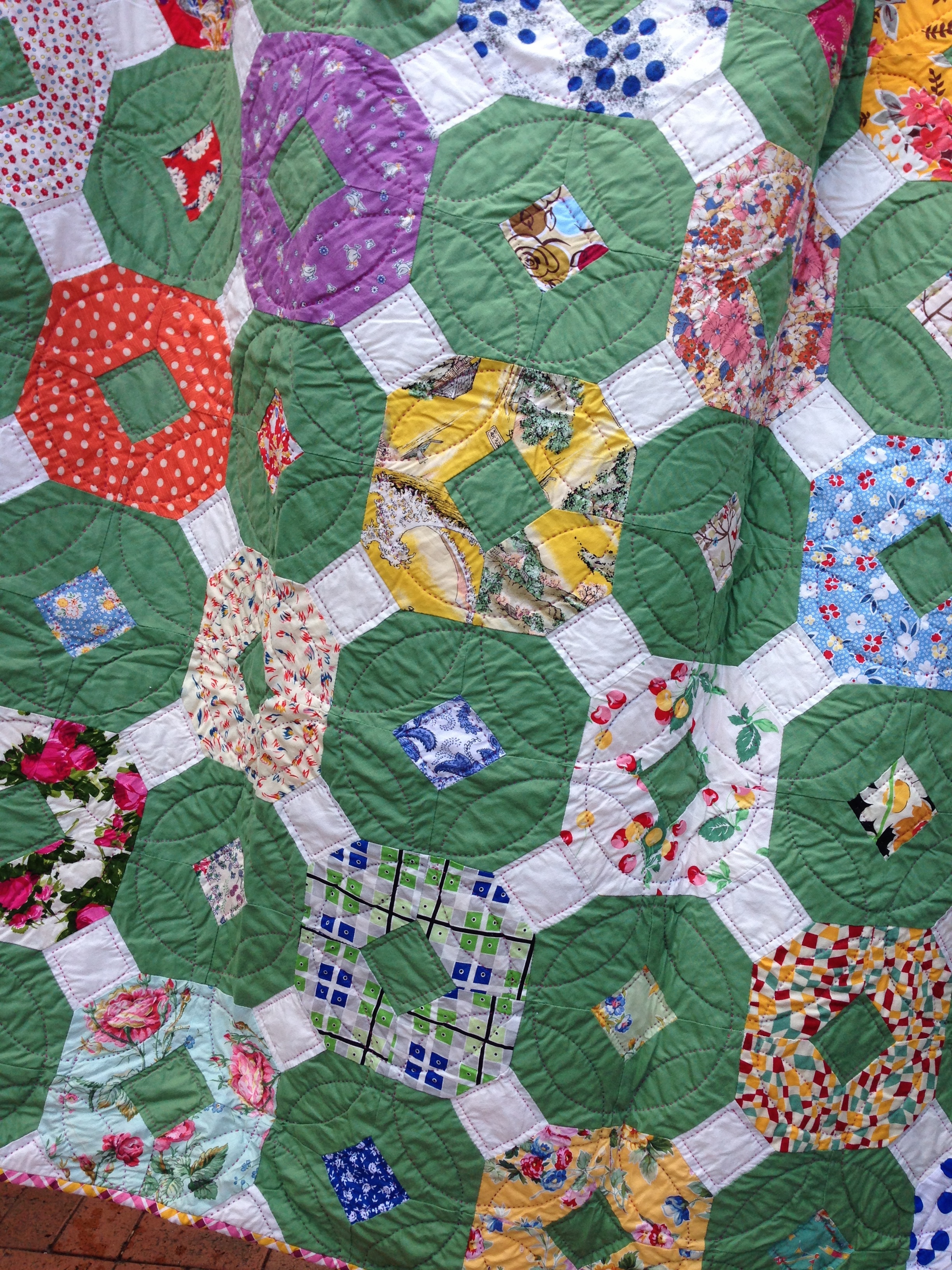
During the Great Depression quilters turned to soft, pretty colours to use in their quilts. There was a multitude of patterned fabrics to choose from. These dainty prints were more often than not offset with bleached calico and a solid colour. Nile green was a favoured choice. In the book ‘Quilt Designs from the Thirties’ by Sara Nephew,
Nephew states ‘Many of the colours of this period are pastels or softened colours. Most common among these are ‘thirties green’, pink, lavender, a buttery yellow, a light blue or blue green, and soft brown or tan. Popular solids also included a strong burgundy, a bright, clear red and a bright clear blue’.

Original greens.

Original greens.

If you have the chance to buy reproduction or vintage fabric in these shades, don’t hesitate. It is invaluable in reproducing quilts with the look of this era.

Reproduction Green, pieced with contemporary, vintage and reproduction fabrics.

Reproduction Green, pieced with contemporary, vintage and reproduction fabrics.

Missouri Daisy quilt made with reproduction and vintage fabrics. Includes some feed sacks.

Missouri Daisy quilt made with reproduction and vintage fabrics. Includes some feed sacks.

I love working with both vintage and reproduction fabrics from the 30s and 40s and look forward to sharing future posts on All Things Thirties.

Happy Making, Janette

More on Mrs. Lewis’s Quilts.

14 Friday Nov 2014

Posted by mcinnesjanette in Welsh quilts

≈ Leave a comment

Tags

hand quilting, old quilts, Welsh quilts

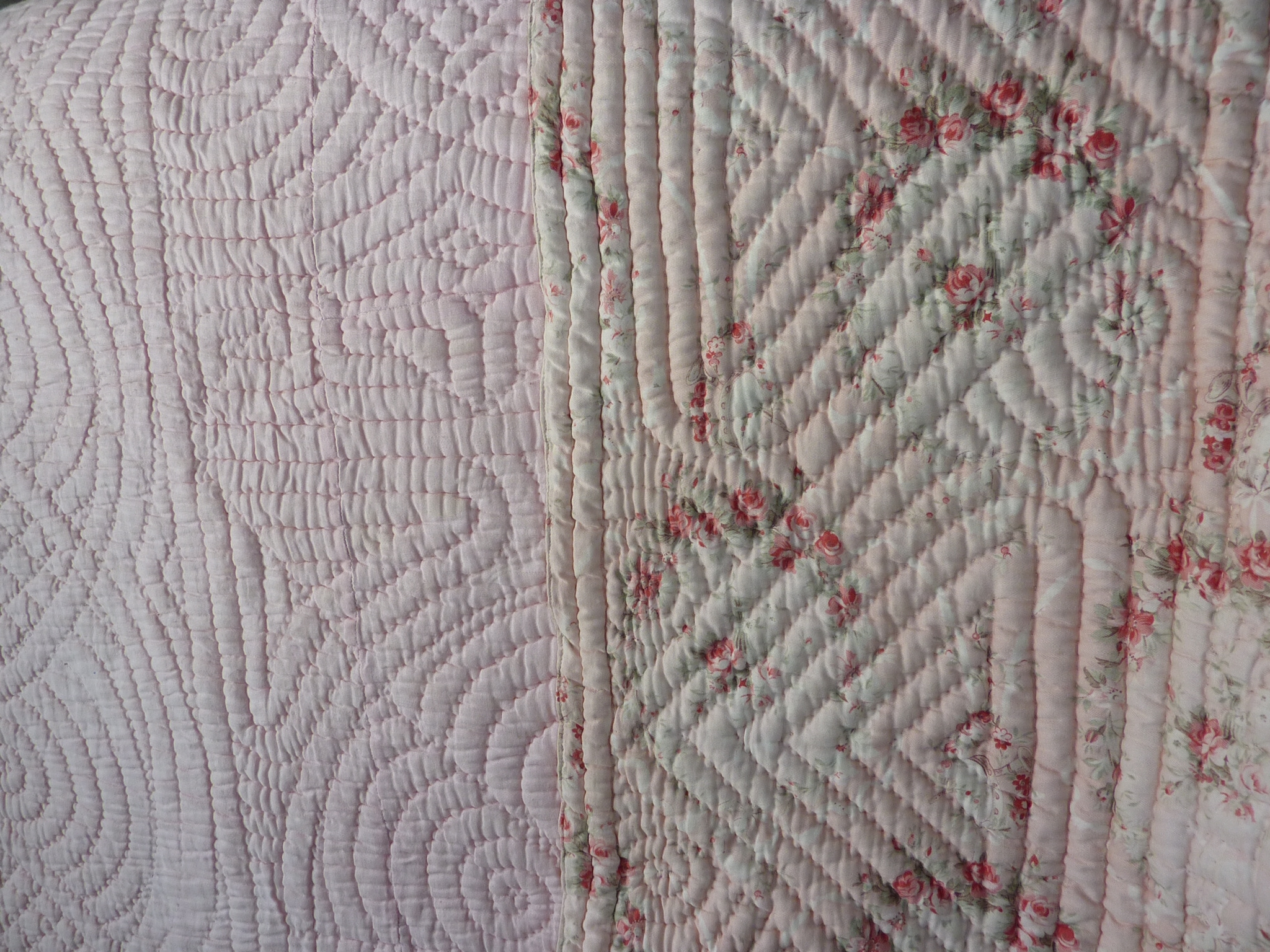
Beautiful Quilting on Wholecloth Welsh quilt

Beautiful Quilting on Wholecloth Welsh quilt

Pretty floral fabric in this whole cloth quilt

Pretty floral fabric in this whole cloth quilt

Wholecloth Miner's Quilt- hand quilting detail

Wholecloth Miner’s Quilt- hand quilting detail


As these quilts are so special and feature wonderful hand quilting, I thought I would publish them once again in the larger format. I hope you can enjoy them and be inspired by the workmanship involved. They certainly are beautiful examples of the Welsh Style of quilting.

A Rescue Mission

26 Sunday Oct 2014

Posted by mcinnesjanette in appliqué, old fabrics, old sewing books, vintage quilts

≈ 6 Comments

Tags

applique, hand quilting, old quilts, old sewing books, vintage fabrics, vintage quilts

I was entrusted with this quilt which I have named Prairie Rose from the quilt collectors Bernie and Eileen Donnelly.

When I first saw this quilt I could see that it had been well made, the button hole stitching on the appliqué and the hand quilting with a perle thread was extremely well executed. Although faded over time the colours are still very pleasing – soft apricot, green and blue on the white background.

Prairie Rose quilt in it's original state

Prairie Rose quilt in it’s original state

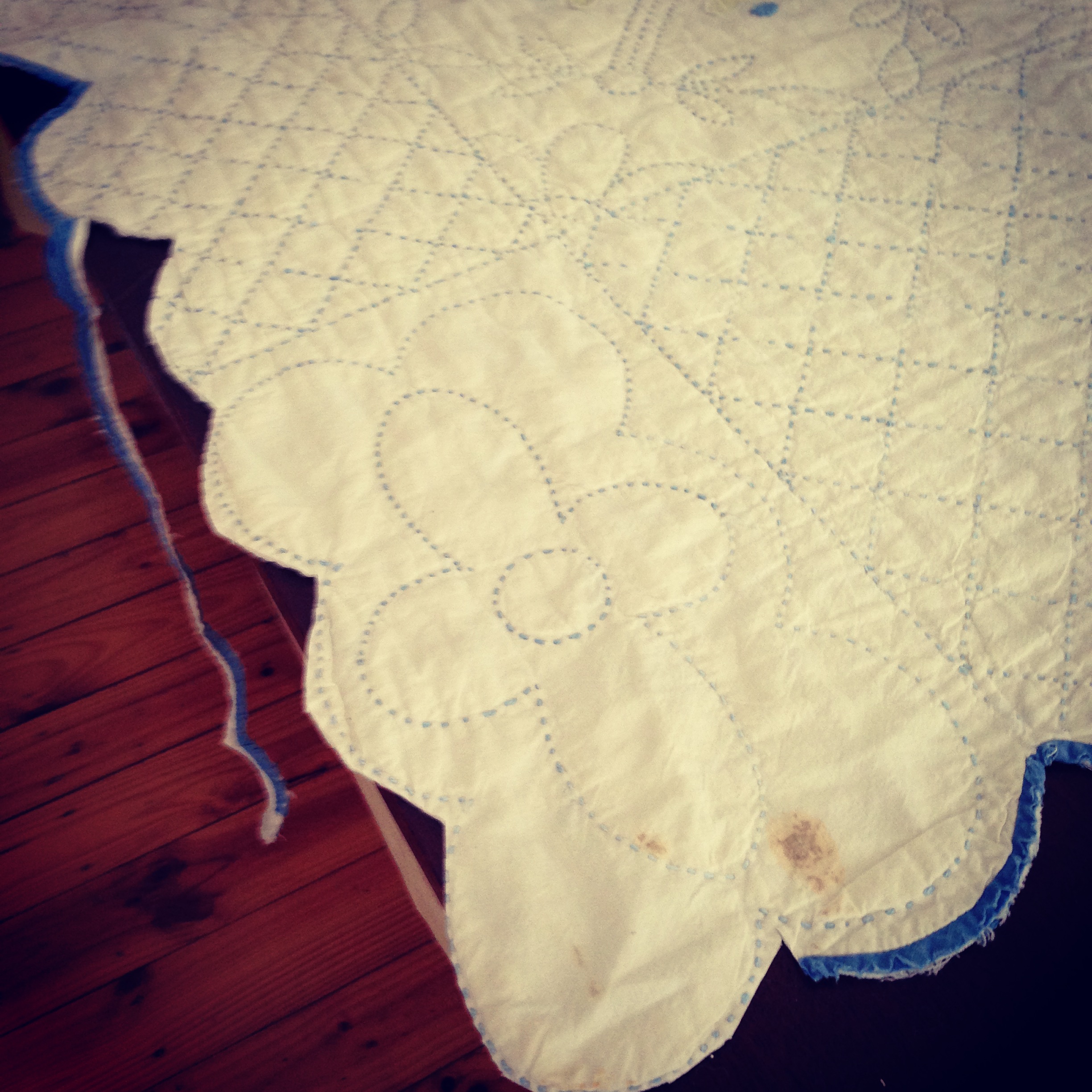
There were two rather large holes and the curved blue binding was in tatters. The quilt was reasonably clean considering it has such a large area of white and had obviously been well used.

Removing the binding

Removing the binding

Preparation for repairing

Preparation for repairing

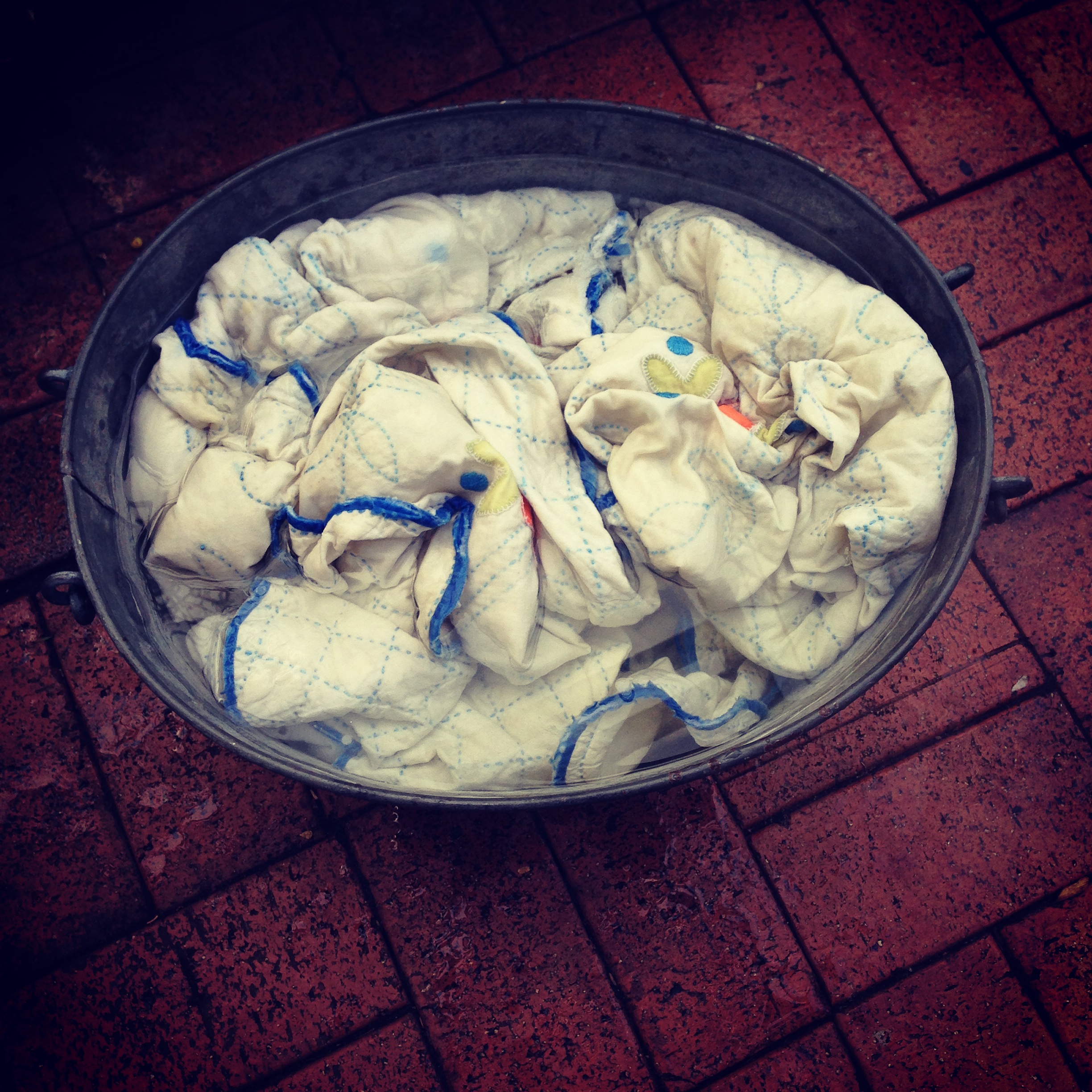
A soak in Retro Clean

A soak in Retro Clean

Retro Clean

Retro Clean

I decided to give this quilt a soak in Retro Clean to remove some of the stains and to generally freshen it up.
After a good soak in the old wash tub I transferred it to the washing machine and washed it on the gentle cycle. As it was a nice sunny day the quilt dried very quickly and I could plan the steps for repairing it.

I decided to cut off the old binding. This also removed some of the damaged areas which were near the edge of the quilt. There were two large tears remaining, that I thought I would be able to patch. Apart from that the quilt was looking very pretty.

this book contains a wonderful chapter on darning and patching

this book contains a wonderful chapter on darning and patching

Following the steps on patching in The Big Book of Needlecraft I proceeded to repair the damaged areas.

Patch placed on the wrong side of the quilt

Patch placed on the wrong side of the quilt

A neat patch in place

A neat patch in place

The next step in repairing the quilt was to re-do the binding. Rummaging through my collection of old fabric and trialling a couple of blues, I found a nice old, blue gingham. Gingham is a favourite of mine and it has a timeless quality. I cut many metres on the bias and machine stitched it onto the quilt. The hand sewing of the curved binding was a slow but rewarding process. I was very happy with the fresh look the gingham provided.

I now have a lovely new/old quilt. I think this quilt was made circa 1940s. It was probably a kit quilt with the quilting and appliqué placement pre marked. The original quilt maker chose thicker threads to appliqué and quilt with, giving this quilt another dimension in texture and colour. I haven’t been able to identify an exact pattern name for this design but I think Prairie Rose suits it very well.

Restored Quilt

Restored Quilt

I thank the quilt maker of the past who so lovingly stitched this quilt and I hope I have honoured her workmanship and I will enjoy having this quilt in my collection. Happy Quilting from Janette, A Plain Needlewoman.

Butterfly Quilts

11 Monday Aug 2014

Posted by mcinnesjanette in appliqué

≈ 6 Comments

Tags

feed sacks, hand quilting, old quilts

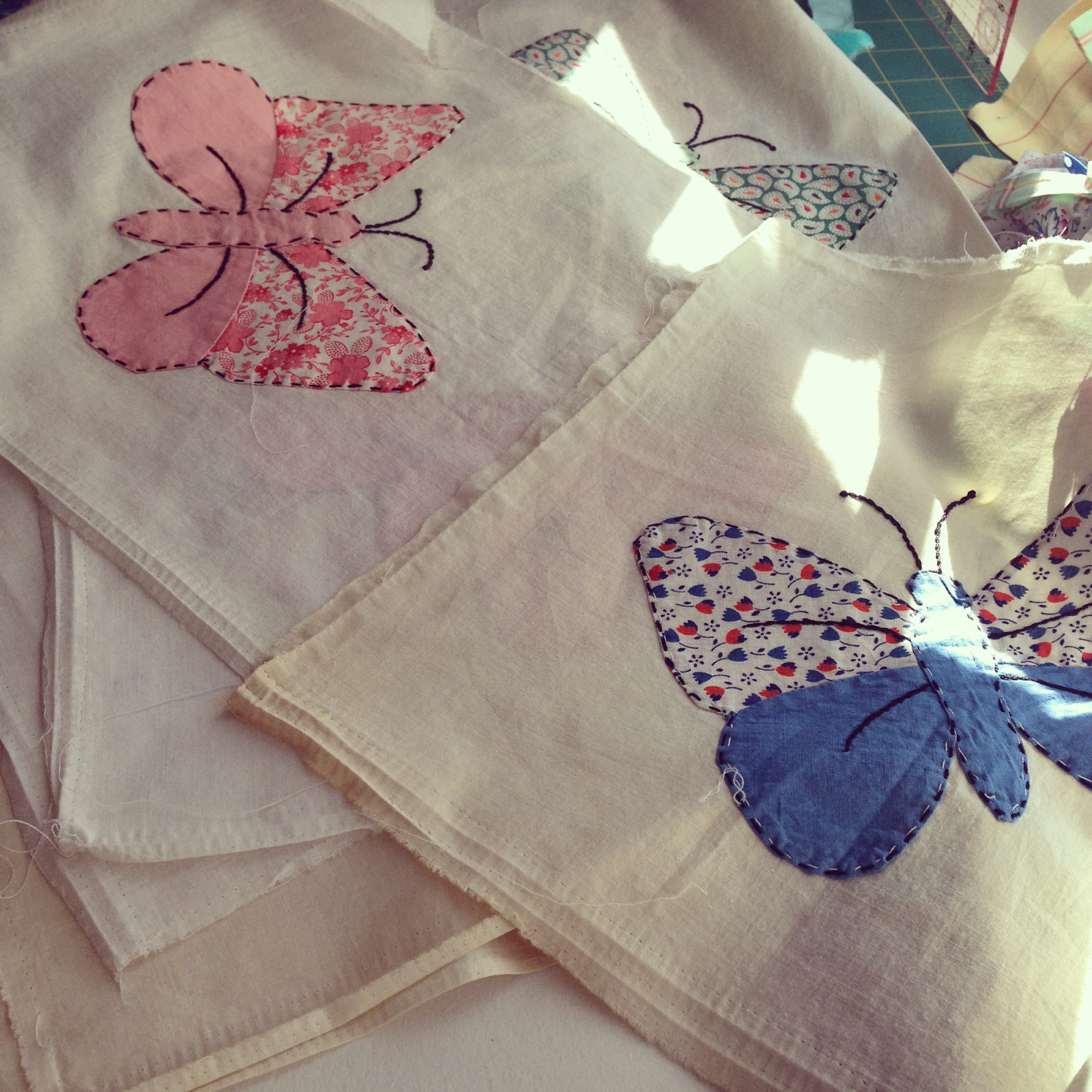
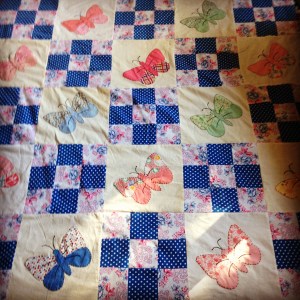
IMG_1727IMG_1729Butterfly quilts are among some of the prettiest quilts made. They seem to have been a particular favourite of the quilt makers of the depression. These blocks appear to have been stitched during this time. When I purchased them they were stitched together in three sets of four. The squares were hemmed, so perhaps the needlewoman intended to use them for d’oyleys. They are in very good condition, nicely appliquéd and finished with a black straight stitch to emphasise the design.
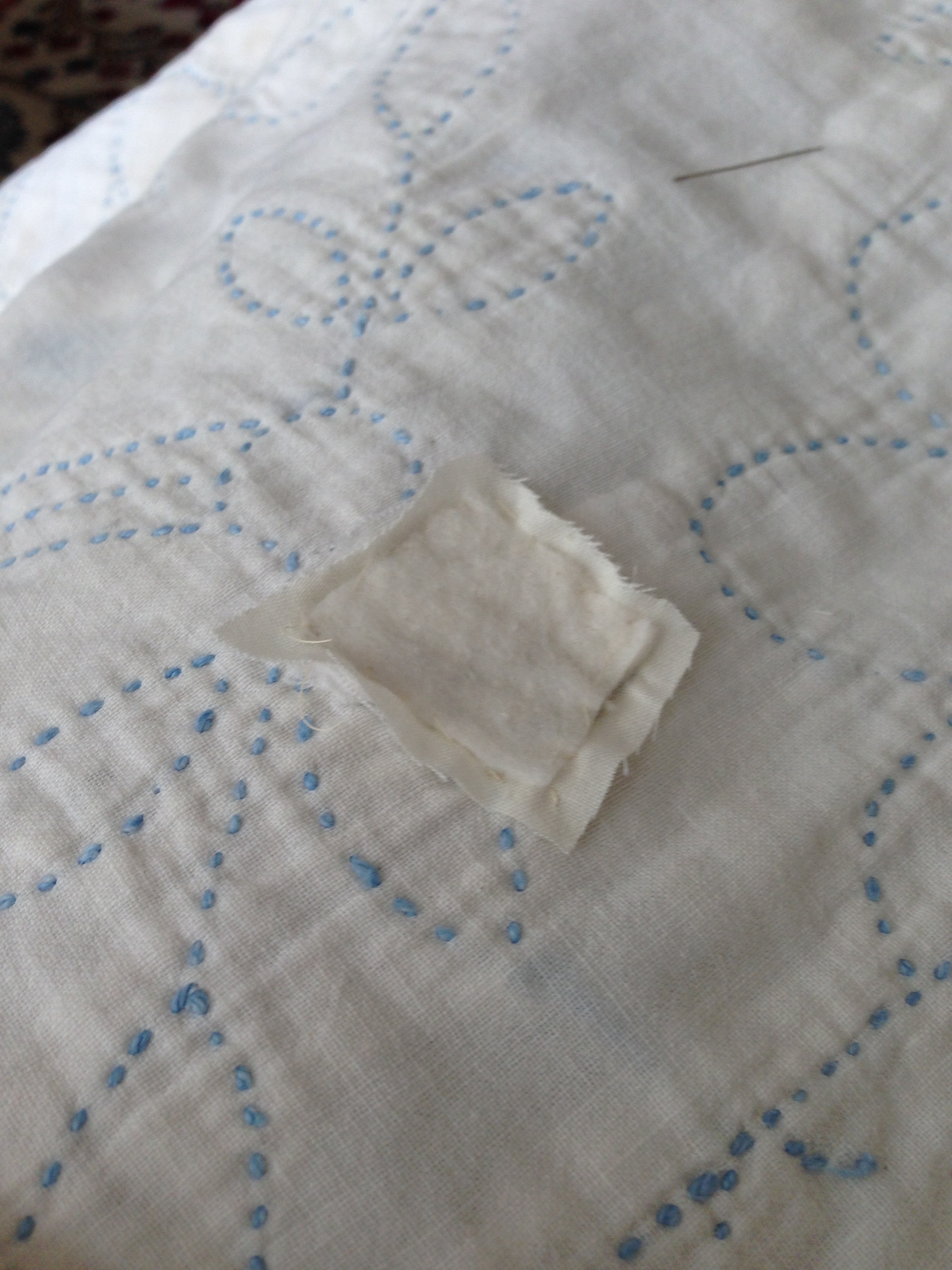
I took the blocks apart and cut them to a standard 11 inch block. I loved the colours in the butterflies, which are so typical of the era. I decided to brighten them up a little with some pretty french floral fabric and a blue and white polka dot.

The butterfly blocks combined with nine patch blocks.

The butterfly blocks combined with nine patch blocks.

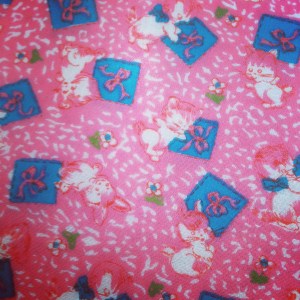
The butterfly and nine patch blocks worked up to quite a nice size so I decided to add a nice wide cream border to allow for lots of hand quilting. I can finish the quilt with a scallop edged binding in the blue polka dot. I found a lovely bright pink vintage fabric which I was lucky enough to have good yardage of for the backing.

Lovely soft cotton for backing

Lovely soft cotton for backing

With Spring just around the corner here in Melbourne, Australia I will be looking out for lots more butterflies.

Happy needle working today!
Janette –

Newer posts →

Recent Posts

  • (no title)
  • Cathedral Window Quilt circa 1930s
  • Marjie”s Star Quilt
  • Australian Crazy Quilt
  • Clarence Valley Coverlet No. 2

Recent Comments

mcinnesjanette's avatarmcinnesjanette on Marjie”s Star Quilt
Lowana Radel's avatarLowana Radel on Marjie”s Star Quilt
Jill's avatarJill on My Wagga Quilt
mcinnesjanette's avatarmcinnesjanette on My Wagga Quilt
Sherry's avatarSherry on My Wagga Quilt

Archives

  • January 2021
  • February 2019
  • November 2018
  • July 2018
  • June 2018
  • May 2018
  • April 2018
  • September 2017
  • June 2017
  • April 2017
  • March 2017
  • February 2017
  • November 2016
  • October 2016
  • September 2016
  • August 2016
  • July 2016
  • June 2016
  • May 2016
  • April 2016
  • January 2016
  • December 2015
  • November 2015
  • October 2015
  • September 2015
  • August 2015
  • July 2015
  • June 2015
  • May 2015
  • April 2015
  • February 2015
  • January 2015
  • December 2014
  • November 2014
  • October 2014
  • September 2014
  • August 2014

Categories

  • 19th century Madder Fabrics
  • antique fabric
  • antique quilts
  • appliqué
  • Australian Quilts
  • Cathedral Window Quilts
  • Christmas
  • Crazy Quilts
  • Cumbria
  • d'oyleys
  • Doll Quilts
  • Double Pinks
  • English Quilts
  • Feed Sack
  • hand piecing
  • hand quilting
  • handquilting
  • hexagons
  • Mary Brooks Picken
  • Mending
  • North Country quilts
  • old fabrics
  • old quilt tops
  • Old Quilts
  • old sewing books
  • Paper Piecing
  • Postage Stamp Quilts
  • Quilt Collections
  • Quilt Restoration
  • Quilt Stories
  • quilting projects
  • red and green quilts
  • Red and White quilts
  • Redwork
  • Repairing old quilts
  • Scrap quilts
  • Sewing machines
  • Signature Quilts
  • Singer Sewing Manuals
  • Spider Webs
  • stitching
  • Stripe Quilts
  • Strippy Quilts
  • Trip Around the World
  • Turkey Red
  • Uncategorized
  • vintage quilts
  • Waggas
  • Welsh quilts
  • Yo-Yo quilts

Meta

  • Create account
  • Log in
  • Entries feed
  • Comments feed
  • WordPress.com

Recent Posts

  • (no title)
  • Cathedral Window Quilt circa 1930s
  • Marjie”s Star Quilt
  • Australian Crazy Quilt
  • Clarence Valley Coverlet No. 2

Recent Comments

mcinnesjanette's avatarmcinnesjanette on Marjie”s Star Quilt
Lowana Radel's avatarLowana Radel on Marjie”s Star Quilt
Jill's avatarJill on My Wagga Quilt
mcinnesjanette's avatarmcinnesjanette on My Wagga Quilt
Sherry's avatarSherry on My Wagga Quilt

Archives

  • January 2021
  • February 2019
  • November 2018
  • July 2018
  • June 2018
  • May 2018
  • April 2018
  • September 2017
  • June 2017
  • April 2017
  • March 2017
  • February 2017
  • November 2016
  • October 2016
  • September 2016
  • August 2016
  • July 2016
  • June 2016
  • May 2016
  • April 2016
  • January 2016
  • December 2015
  • November 2015
  • October 2015
  • September 2015
  • August 2015
  • July 2015
  • June 2015
  • May 2015
  • April 2015
  • February 2015
  • January 2015
  • December 2014
  • November 2014
  • October 2014
  • September 2014
  • August 2014

Categories

  • 19th century Madder Fabrics
  • antique fabric
  • antique quilts
  • appliqué
  • Australian Quilts
  • Cathedral Window Quilts
  • Christmas
  • Crazy Quilts
  • Cumbria
  • d'oyleys
  • Doll Quilts
  • Double Pinks
  • English Quilts
  • Feed Sack
  • hand piecing
  • hand quilting
  • handquilting
  • hexagons
  • Mary Brooks Picken
  • Mending
  • North Country quilts
  • old fabrics
  • old quilt tops
  • Old Quilts
  • old sewing books
  • Paper Piecing
  • Postage Stamp Quilts
  • Quilt Collections
  • Quilt Restoration
  • Quilt Stories
  • quilting projects
  • red and green quilts
  • Red and White quilts
  • Redwork
  • Repairing old quilts
  • Scrap quilts
  • Sewing machines
  • Signature Quilts
  • Singer Sewing Manuals
  • Spider Webs
  • stitching
  • Stripe Quilts
  • Strippy Quilts
  • Trip Around the World
  • Turkey Red
  • Uncategorized
  • vintage quilts
  • Waggas
  • Welsh quilts
  • Yo-Yo quilts

Meta

  • Create account
  • Log in
  • Entries feed
  • Comments feed
  • WordPress.com

Blog at WordPress.com.

  • Subscribe Subscribed
    • The Plain Needlewoman
    • Join 111 other subscribers
    • Already have a WordPress.com account? Log in now.
    • The Plain Needlewoman
    • Subscribe Subscribed
    • Sign up
    • Log in
    • Report this content
    • View site in Reader
    • Manage subscriptions
    • Collapse this bar
 

Loading Comments...